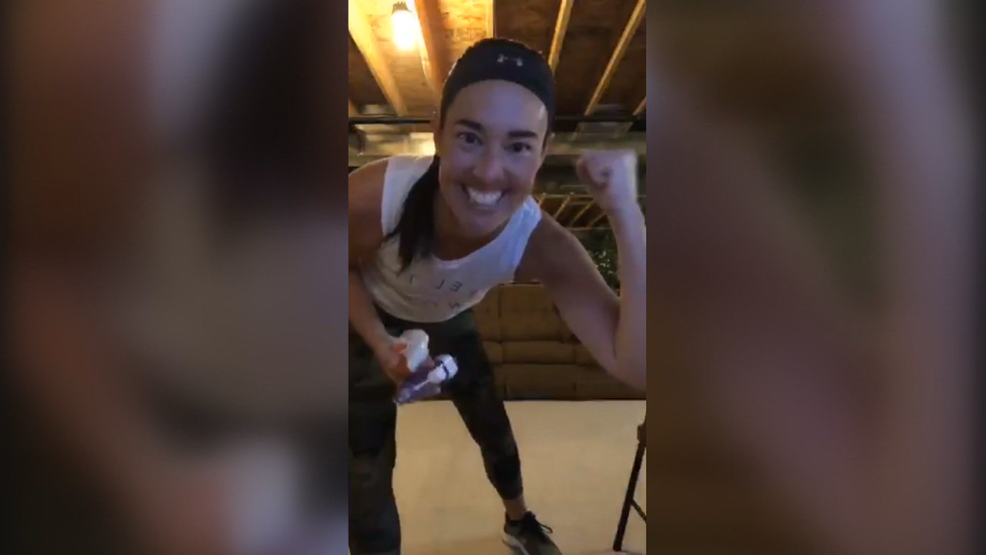
CINCINNATI (WKRC) – Lingering symptoms after COVID-19 is a reality. One in five people become COVID long-haulers. Kasey Reder has always prioritized staying active. “I was a big runner. Lots of mini marathons, Beachbody coach, lots of home workouts, belong to a nearby gym,” Reder said. In November, Reder got COVID-19 and had to put that lifestyle on hold. At first, it was only a few symptoms. “I just had a lot of really bad fatigue.
Gainesville resident Chris Ash tested positive for COVID- 19 last December after taking various precautions and social distancing. Although she only experienced mild flu-like symptoms, she said testing positive felt “terrifying.”
The Ayala High School cheer team in Chino Hills demonstrated in front of their school district office Thursday after learning just hours before they were set to perform, that cheer was cancelled du…
NEW MEXICO (KRQE) – A year into the pandemic, COVID-19 has claimed the lives of 3,877 New Mexicans, and nearly 190,000 people have contracted the virus. Most people who’ve died from COV…
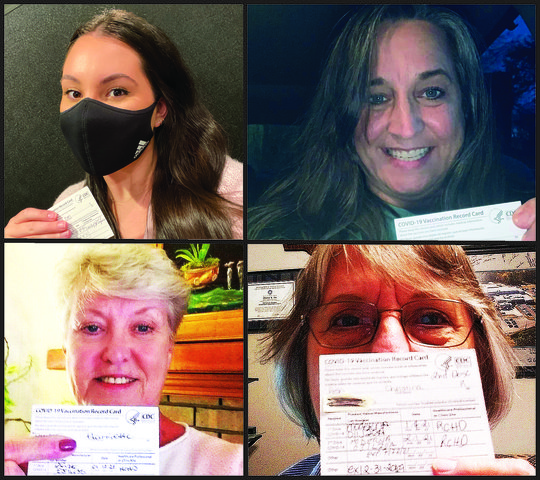
As countries grow eager to reignite their economies and people increasingly yearn for mobility and normalcy in life, pressure is mounting for some form of COVID-19 health status certificate that would support these desires. There has already been an explosion of COVID-19 passport initiatives for domestic use and international travel. But scientific, legal, and ethical concerns abound with such documentation. Given the high stakes, what is the path forward? From doctors’ examinations to ship inspections, clean bills of health have secured passage through centuries of human plagues. Today’s best-known health passport is the International Certificate of Vaccination or Prophylaxis, created by the World Health Organization (WHO). WHO’s Yellow Card has certified vaccinations for cholera, plague, and typhoid, among other infections. There is certainly precedent for a COVID-19 vaccination passport certifying that the holder can travel, study, play, and work without compromising personal or public health. Among newly proposed COVID-19 passport schemes are the WHO’s Smart Vaccination Certificate, Israel’s “green passport,” the European Union’s proposed Digital Green Pass, and the Africa Centres for Disease Control and Prevention’s “My COVID Pass.” Given the momentum, what are the main principles that COVID-19 passports should follow to ensure their appropriate use? A COVID-19 passport should be scientifically valid. Passport holders must be protected from illness so that they can carry out the activities for which the passport has been issued and to avoid burdening health services. A passport would ideally certify that holders are not, and cannot become, a source of infection for others. Vaccines have high efficacy in preventing symptomatic COVID-19, and there is growing evidence that they can prevent transmission too. No vaccine is perfect, and it remains to be determined whether vaccines meet minimum requirements for preventing infection and illness. The duration of protection conferred by vaccines should be tied to passport expiry dates, perhaps with options to revoke passports if new coronavirus variants compromise efficacy. These passports should also be judged for their comparative advantage. They may be preferable to viral RNA and antigen tests, which aim to certify that individuals are temporarily free of infection, and to antibody tests, which do not guarantee immunity to infection or disease. The vaccination certificate should be portable, affordable, and linked safely and securely to the identity of the holder. Ideally, it will be internationally standardized with verifiable credentials and based on interoperable technologies. Forgery and personal data security are dominant concerns, but such problems are routinely solved for financial and other sensitive transactions. Many issues surround the fair use of vaccination passports. The widely held view is that documents must avoid discrimination and inequity. Ideally, a passport would be exclusive only with respect to its primary purpose, which is to protect the health of individuals and others with whom they come into contact. But such exclusions inevitably raise barriers elsewhere. Some, such as restrictions on nonessential leisure activities, should be relatively easy to manage. The greatest risk is that people for whom vaccination is unacceptable, untested, inaccessible, or impossible are denied access to essential goods and services. This could happen where there is vaccine hesitancy or refusal among certain ethnic minorities; where there are no data on vaccine efficacy for people at risk, such as children and pregnant women; where migrants are undocumented and unreachable; where passports are exclusively digital, barring people without smartphones; and where people are not yet eligible for vaccination. These examples signal the need for alternatives and exemptions. Some decisions about how to use passports will be made by public debate and consent, drawing on social and ethical norms. Others will be determined by domestic and international law. Some employers have already announced “no jab, no job” policies. In such cases, the freedom of choice for individual employees, set against a firm’s duty and preference for the care of all staff, might be tested in court. COVID-19 is a new human disease. The challenges presented by vaccination passports are also new in detail, but mostly familiar in kind. Adding to current, imperfect certification procedures by diagnostic tests, vaccination passports are likely to be widely adopted during the pandemic and its probable sequel, endemic and episodic disease. The choice about how passports are used should be guided by exemplary science, appropriate technologies, and fair use for all.
After months of demand for COVID-19 vaccines far exceeding supply, health departments are now struggling to fill open slots. “Particularly in our rural areas, there are a lot of slots that go unfilled,” Tennessee health commissioner Dr. Lisa Piercey said. Piercey said there are 500,000 vaccine appointments available statewide. In East Tennessee, half of slots go unused. SIGN UP FOR YOUR VACCINE APPOINTMENT | COVID-19 Resources: Vaccine AccessSullivan County medical director Dr.
The borough this week had the state’s highest new case levels and the lowest vaccination levels.
We use cookies to ensure that we give you the best experience on our website. If you continue to use this site we will assume that you are happy with it.