Press "Enter" to skip to content

Posts published in “Archives: Feed Items

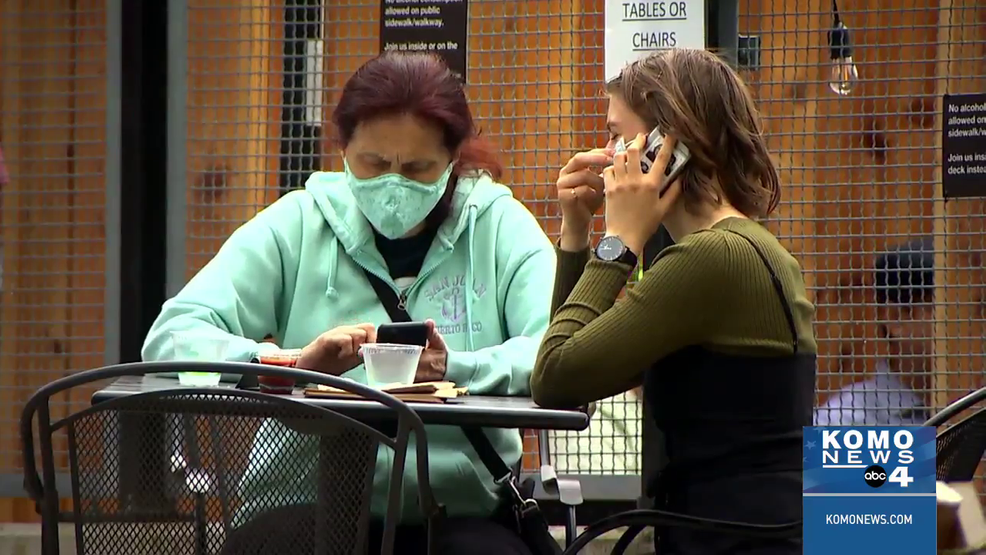
COVID-19: State’s mandatory face mask rule now in effect

After weeks of what was believed to be progress in taming COVID-19 across the U. S. and in Washington state, much of that progress appears to be rapidly eroding with growing numbers of new confirmed cases in some Puget Sound areas and Sun Belt states. Officials in Texas, Arizona and California said their states set single-day records for new infections this week while a new data model released by University of Washington researchers predicts the death toll to rise to 179,000 by Oct. 1.

Changes in contact patterns shape the dynamics of the COVID-19 outbreak in China

The coronavirus 2019 (COVID-19) pandemic has brought tighter restrictions on the daily lives of millions of people, but we do not yet understand what measures are the most effective. Zhang et al. modeled virus transmission in Wuhan, China, in February 2020, investigating the effects of interventions ranging from patient management to social isolation. Age-mixing patterns were estimated by contact surveys conducted in Wuhan and Shanghai at the beginning of February 2020. Once people reduced their average daily contacts from 14 to 20 down to 2, transmission rapidly fell below the epidemic threshold. The model also showed that preemptive school closures helped to reduce transmission, although alone they would not prevent a COVID-19 outbreak. Limiting human mixing to within households appeared to be the most effective measure. Science , this issue p. [1481][1] Intense nonpharmaceutical interventions were put in place in China to stop transmission of the novel coronavirus disease 2019 (COVID-19). As transmission intensifies in other countries, the interplay between age, contact patterns, social distancing, susceptibility to infection, and COVID-19 dynamics remains unclear. To answer these questions, we analyze contact survey data for Wuhan and Shanghai before and during the outbreak and contact-tracing information from Hunan province. Daily contacts were reduced seven- to eightfold during the COVID-19 social distancing period, with most interactions restricted to the household. We find that children 0 to 14 years of age are less susceptible to severe acute respiratory syndrome coronavirus 2 (SARS-CoV-2) infection than adults 15 to 64 years of age (odds ratio 0.34, 95% confidence interval 0.24 to 0.49), whereas individuals more than 65 years of age are more susceptible to infection (odds ratio 1.47, 95% confidence interval 1.12 to 1.92). Based on these data, we built a transmission model to study the impact of social distancing and school closure on transmission. We find that social distancing alone, as implemented in China during the outbreak, is sufficient to control COVID-19. Although proactive school closures cannot interrupt transmission on their own, they can reduce peak incidence by 40 to 60% and delay the epidemic. [1]: /lookup/doi/10.1126/science.abb8001

San Diego Reports 300-Plus New COVID-19 Cases For 4th Time In 5 Days

After 310, 302 and 332 new cases were reported on Sunday, Monday and Wednesday — representing an above-average percentage of positive cases to total tests performed — the numbers rose yet again Thursday, with 4% of tests returning positive