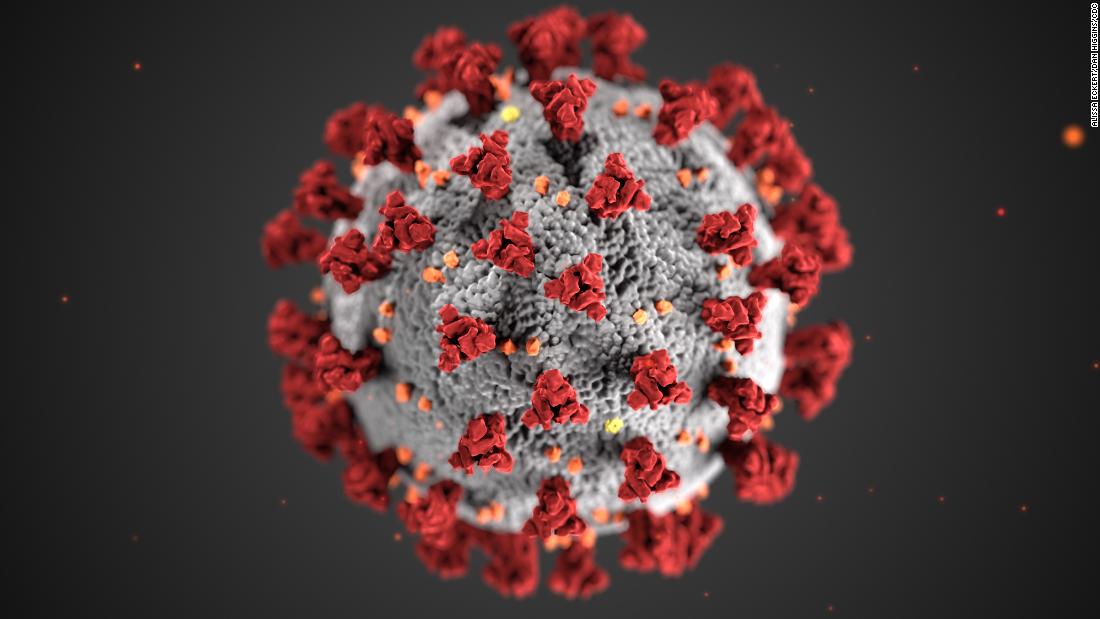
Viruses enter cells and initiate infection by binding to their cognate cell surface receptors. The expression and distribution of viral entry receptors therefore regulates their tropism, determining the tissues that are infected and thus disease pathogenesis. Severe acute respiratory syndrome coronavirus 2 (SARS-CoV-2) is the third human coronavirus known to co-opt the peptidase angiotensin-converting enzyme 2 (ACE2) for cell entry ([ 1 ][1]). The interaction between SARS-CoV-2 and ACE2 is critical to determining both tissue tropism and progression from early SARS-CoV-2 infection to severe coronavirus disease 2019 (COVID-19). Understanding the cellular basis of SARS-CoV-2 infection could reveal treatments that prevent the development of severe disease, and thus reduce mortality. As with all coronaviruses, SARS-CoV-2 cell entry is dependent on its 180-kDa spike (S) protein, which mediates two essential events: binding to ACE2 by the amino-terminal region, and fusion of viral and cellular membranes through the carboxyl-terminal region ([ 2 ][2]). Infection of lung cells requires host proteolytic activation of spike at a polybasic furin cleavage site ([ 3 ][3]). To date, this cleavage site is found in all spike proteins from clinical SARS-CoV-2 isolates, as well as some other highly pathogenic viruses (e.g., avian influenza A), but it is absent from SARS-CoV and is likely to have been acquired by recombination between coronaviruses in bats. Cleavage by the furin protease therefore expands SARS-CoV-2 cell tropism and may have facilitated transmission from bats to humans ([ 1 ][1]). Membrane fusion also requires cleavage by additional proteases, particularly transmembrane protease serine 2 (TMPRSS2), a host cell surface protease that cleaves spike shortly after binding ACE2 ([ 3 ][3]). SARS-CoV-2 tropism is therefore dependent on expression of cellular proteases, as well as ACE2. Other proteins that enable SARS-CoV-2 cell entry are also emerging, including neuropilin 1 (NRP1), a receptor that binds the carboxyl-terminal RXXR motif in spike that is exposed after furin cleavage. How NRP1 promotes cell entry is unclear, but it may further increase the cell types infected ([ 4 ][4]). Of the seven known human coronaviruses, three are highly pathogenic [SARS-CoV, SARS-CoV-2, and Middle East respiratory syndrome (MERS)-CoV], and the remaining four (HCoV-NL63, HCoV-229E. HCoV-OC43, and HCOV-HKU1) are less virulent, causing “common colds.” SARS-CoV, SARS-CoV-2, and HCoV-NL63 use ACE2 as their cell entry receptor. MERS-CoV binds DPP4 (dipeptidyl peptidase 4) and HCoV-229E uses CD13 (aminopeptidase N) ([ 2 ][2]). No host protein receptors have been identified for the other two viruses. It seems a notable coincidence that all known human coronavirus receptors are cell surface peptidases, particularly because the interactions do not involve the endopeptidase active site ([ 2 ][2]). The presence of a specific region within ACE2, targeted by three coronaviruses, is particularly noteworthy ([ 1 ][1]). Conversely, the receptor-binding domain of spike is encoded by the most variable part of the coronavirus genome ([ 1 ][1]). This implies that diversification of these viruses generated different sequences that converged on the same region of the same protein using alternative structural solutions. What, then, is so special about ACE2? ACE2 is a transmembrane protein best characterized for its homeostatic role in counterbalancing the effects of ACE on the cardiovascular system ([ 5 ][5]). ACE converts angiotensin I to angiotensin II, a highly active octapeptide that exhibits both vasopressor (vascular contraction to increase blood pressure) and proinflammatory activities. The carboxypeptidase activity of ACE2 converts angiotensin II to the heptapeptide angiotensin-(1-7), a functional antagonist of angiotensin II. Because ACE is highly expressed in vascular endothelial cells of the lungs, angiotensin II is also likely to be high in the pulmonary vasculature. Indeed, Ace2 deletion in mouse models of acute lung injury results in more severe disease, suggesting a protective role for ACE2 in lung tissue ([ 5 ][5]). In many host-virus interactions, expression of the viral receptor is down-regulated in infected cells, and expression of ACE2 in the lungs of mice was reduced by SARS-CoV infection. Depletion of ACE2 may thus play a causative role in the lung injury caused by SARS-CoV and SARS-CoV-2, and high plasma angiotensin II is reported in patients with COVID-19. However, MERS-CoV causes a similar lung disease without targeting ACE2, so other factors must also be important. As a respiratory virus, SARS-CoV-2 must initially enter cells lining the respiratory tract. Single-cell sequencing and RNA in situ mapping of the human respiratory tract show ACE2 and TMPRSS2 expression to be highest in ciliated nasal epithelial cells, with lesser amounts in ciliated bronchial epithelial cells and type II alveolar epithelial cells ([ 6 ][6]). This translates to greater permissivity of upper versus lower respiratory tract epithelial cells for SARS-CoV-2 infection in vitro and fits disease pathology: Upper respiratory tract symptoms are common early in disease, with nasopharyngeal and throat swabs positive for SARS-CoV-2 at clinical presentation ([ 7 ][7]). In contrast to SARS-CoV, infectivity of patients with SARS-CoV-2 peaks before symptom onset ([ 8 ][8]). Indeed, presymptomatic transmission makes SARS-CoV-2 impossible to contain through case isolation alone and is a key driver of the pandemic ([ 8 ][8]). This alteration in the pattern of disease may relate to the acquisition of the furin cleavage site in spike or increased binding affinity for ACE2 in SARS-CoV-2, compared with SARS-CoV ([ 9 ][9]). If the main role of ACE2 is to cleave angiotensin II, it is unclear why expression in lung tissue is more prominent in epithelial than in endothelial cells. Furthermore, the Human Cell Atlas highlights ACE2 expression in intestinal enterocytes, rather than in the lungs. This distribution may reflect nonenzymatic roles of ACE2, such as chaperoning amino acid transporters. Indeed, SARS-CoV-2 infection of the gastrointestinal (GI) tract is common, with viral RNA detectable in stool in up to 30% of COVID-19 patients. This likely contributes to the frequency of GI symptoms. Conversely, whereas fecal-oral transmission of coronaviruses is thought to be prominent among bats, it appears to be a minor transmission route for SARS-CoV-2 in humans, perhaps because colonic fluid inactivates the virus. Whether extrapulmonary ACE2 expression and concomitant viral infection account for other clinical manifestations of SARS-CoV-2 is unclear. The association between SARS-CoV-2 infection and anosmia (loss of smell) may reflect ACE2 and TMPRSS2 expression in sustentacular cells, which maintain the integrity of olfactory sensory neurons. Olfactory epithelial cells also express NRP1 and could provide a direct route to the brain ([ 4 ][4]). Although a substantial proportion of SARS-CoV-2–infected individuals report few, if any, symptoms and recover completely, chest computed tomography (CT) evidence of viral pneumonitis is present in >90% of symptomatic cases within 3 to 5 days of onset ([ 10 ][10]). This presumably reflects viral replication in the lower respiratory tract, with infection of type II pneumocytes and accompanying inflammation (see the figure). Lung pathology in this early phase is poorly reported because most patients recover. Histopathology from cynomolgus monkeys, 4 days after inoculation with SARS-CoV-2, shows a viral pneumonitis with alveolar edema, capillary leakage, inflammatory cell infiltration, interstitial thickening, and cell fusion (a feature of coronavirus infection), with viral spike expression on alveolar epithelial cells ([ 11 ][11]). ![Figure][12] Key phases of disease progression Severe acute respiratory syndrome coronavirus 2 (SARS-CoV-2) binds to angiotensin-converting enzyme 2 (ACE2). Initial infection of cells in the upper respiratory tract may be asymptomatic, but these patients can still transmit the virus. For those who develop symptoms, up to 90% will have pneumonitis, caused by infection of cells in the lower respiratory tract. Some of these patients will progress to severe disease, with disruption of the epithelial-endothelial barrier, and multi-organ involvement. GRAPHIC: V. ALTOUNIAN/ SCIENCE Around 80% of patients with COVID-19 pneumonitis recover without specific treatment ([ 12 ][13]). However, ∼20% of patients deteriorate, often rapidly, ∼7 to 10 days after symptom onset. This is when patients are most frequently admitted to hospital, with worsening fever, hypoxia, lymphopenia, rising inflammatory markers [C reactive protein (CRP), interleukin-1 (IL-1), and IL-6], coagulopathy, and cardiovascular involvement. About 25% of these patients will require mechanical ventilation, which is associated with high mortality (50 to 80%). The demographic of this “at risk” group is reproduced across many countries: older men with hypertension, diabetes, and obesity, as well as a less well defined contribution of ethnicity ([ 12 ][13]). Similar factors regulate ACE2 expression, which may therefore contribute to disease severity. Nonetheless, the amount and distribution of ACE2 expression cannot be the only factor affecting disease progression, because the three human coronaviruses that use ACE2 for cell entry exhibit markedly different pathogenicity. What causes the sharp deterioration that leads to severe systemic COVID-19? The lung pathology in severe disease is different from the earlier pneumonitis, with progressive loss of epithelial-endothelial integrity, septal capillary injury, and a marked neutrophil infiltration, with complement deposition, intravascular viral antigen deposition, and localized intravascular coagulation ([ 13 ][14]). If the earlier viral pneumonitis reflects direct ACE2-mediated infection of type II pneumocytes, what drives this next, potentially deadly phase of acute lung injury, with the concomitant breakdown of the respiratory epithelial barrier, endothelial damage, and patient deterioration ([ 14 ][15])? Most importantly—how can it be stopped? The timing of deterioration suggests a role for the adaptive immune system, either antibodies or T cells, and has many hallmarks of immune-driven inflammation. Endothelial injury may result from immune-mediated damage, through complement activation, antibody-dependent enhancement, and/or cytokine release. Attention has therefore focused on the use of immunomodulatory therapies in patients with severe disease. Nonetheless, the most obvious culprit for severe disease is the virus itself, either alone or with immune pathology. Breakdown of the lung epithelial-endothelial barrier might trigger endothelial damage and viral dissemination, with more widespread infection ([ 14 ][15]). Studies documenting the time course of SARS-CoV-2 RNA shedding are mainly limited to mild disease ([ 7 ][7]) and typically show a progressive decline after a peak around symptom onset. However, viral load from lung swabs may correlate with disease severity ([ 15 ][16]), and patients with severe lung disease remain RNA-positive for longer. It is critical to determine how long active viral replication really persists in the lungs of patients with severe disease, and how frequently viral replication occurs at extrapulmonary sites where ACE2 (or other receptors) is expressed, such as vascular endothelium. Although there are huge efforts to understand and treat severe COVID-19, it would be preferable to prevent the development and progression of clinical disease. How might this be achieved? Vaccine candidates are mainly aimed at eliciting neutralizing antibodies, to prevent the binding of spike to ACE2. The same rationale underpins the use of passive immunization, with convalescent plasma or monoclonal antibodies, or the administration of recombinant, soluble ACE2. Alternatively, antiviral drugs may be used to target essential viral enzymes such as the RNA-dependent RNA polymerase. Experience from other infections, such as influenza, emphasizes that treatment with antiviral agents is most effective when administered as early as possible in infection. Therefore, it is essential to identify individuals with early SARS-CoV-2 infection who are at high risk of progression to severe disease, and test antiviral therapies to prevent viral entry and replication. It should not be too difficult to identify these “at risk” patients who are in danger of progressing to severe disease through contact tracing and testing, even prior to symptom onset. Conversely, delaying candidate antiviral treatment until patients are hospitalized with severe lung injury may be too late, and combination with immune modulation is likely to be required. 1. [↵][17]1. K. G. Andersen et al ., Nat. Med. 26, 450 (2020). [OpenUrl][18][CrossRef][19][PubMed][20] 2. [↵][21]1. F. Li , J. Virol. 89, 1954 (2015). [OpenUrl][22][Abstract/FREE Full Text][23] 3. [↵][24]1. M. Hoffmann et al ., Mol. Cell 78, 779 (2020). [OpenUrl][25] 4. [↵][26]1. L. Cantuti-Castelvetri et al ., bioRxiv 2020.06.07.137802 (2020). 5. [↵][27]1. K. Kuba et al ., J. Mol. Med. 84, 814 (2006). [OpenUrl][28][CrossRef][29][PubMed][30][Web of Science][31] 6. [↵][32]1. Y. J. Hou et al ., Cell 10.1016/j.cell.2020.05.042 (2020). 7. [↵][33]1. R. Wölfel et al ., Nature 581, 465 (2020). [OpenUrl][34][CrossRef][35][PubMed][20] 8. [↵][36]1. X. He et al ., Nat. Med. 26, 672 (2020). [OpenUrl][37][PubMed][20] 9. [↵][38]1. D. Wrapp et al ., Science 367, 1260 (2020). [OpenUrl][39][Abstract/FREE Full Text][40] 10. [↵][41]1. A. Bernheim et al ., Radiology 295, 200463 (2020). [OpenUrl][42][PubMed][20] 11. [↵][43]1. B. Rockx et al ., Science 368, 1012 (2020). [OpenUrl][44][Abstract/FREE Full Text][45] 12. [↵][46]1. Z. Wu, 2. J. M. McGoogan , JAMA 323, 1239 (2020). [OpenUrl][47][CrossRef][48][PubMed][20] 13. [↵][49]1. C. Magro et al ., Transl. Res. 220, 1 (2020). [OpenUrl][50] 14. [↵][51]1. L. A. Teuwen et al ., Nat. Rev. Immunol. 20, 389 (2020). [OpenUrl][52] 15. [↵][53]1. J. Chen et al ., J. Infect. 10.1016/j.jinf.2020.03.004 (2020). Acknowledgments: The authors are supported by the Medical Research Council (CSF MR/P008801/1 to N.J.M.), NHS Blood and Transplant (WPA15-02 to N.J.M.), and the Wellcome Trust (PRF 210688/Z/18/Z to P.J.L.). [1]: #ref-1 [2]: #ref-2 [3]: #ref-3 [4]: #ref-4 [5]: #ref-5 [6]: #ref-6 [7]: #ref-7 [8]: #ref-8 [9]: #ref-9 [10]: #ref-10 [11]: #ref-11 [12]: pending:yes [13]: #ref-12 [14]: #ref-13 [15]: #ref-14 [16]: #ref-15 [17]: #xref-ref-1-1 “View reference 1 in text” [18]: {openurl}?query=rft.jtitle%253DNat.%2BMed.%26rft.volume%253D26%26rft.spage%253D450%26rft_id%253Dinfo%253Adoi%252F10.1038%252Fs41591-020-0820-9%26rft_id%253Dinfo%253Apmid%252Fhttp%253A%252F%252Fwww.n%26rft.genre%253Darticle%26rft_val_fmt%253Dinfo%253Aofi%252Ffmt%253Akev%253Amtx%253Ajournal%26ctx_ver%253DZ39.88-2004%26url_ver%253DZ39.88-2004%26url_ctx_fmt%253Dinfo%253Aofi%252Ffmt%253Akev%253Amtx%253Actx [19]: /lookup/external-ref?access_num=10.1038/s41591-020-0820-9&link_type=DOI [20]: /lookup/external-ref?access_num=http://www.n&link_type=MED&atom=%2Fsci%2F369%2F6503%2F510.atom [21]: #xref-ref-2-1 “View reference 2 in text” [22]: {openurl}?query=rft.jtitle%253DJ.%2BVirol.%26rft_id%253Dinfo%253Adoi%252F10.1128%252FJVI.02615-14%26rft_id%253Dinfo%253Apmid%252F25428871%26rft.genre%253Darticle%26rft_val_fmt%253Dinfo%253Aofi%252Ffmt%253Akev%253Amtx%253Ajournal%26ctx_ver%253DZ39.88-2004%26url_ver%253DZ39.88-2004%26url_ctx_fmt%253Dinfo%253Aofi%252Ffmt%253Akev%253Amtx%253Actx [23]: /lookup/ijlink/YTozOntzOjQ6InBhdGgiO3M6MTQ6Ii9sb29rdXAvaWpsaW5rIjtzOjU6InF1ZXJ5IjthOjQ6e3M6ODoibGlua1R5cGUiO3M6NDoiQUJTVCI7czoxMToiam91cm5hbENvZGUiO3M6MzoianZpIjtzOjU6InJlc2lkIjtzOjk6Ijg5LzQvMTk1NCI7czo0OiJhdG9tIjtzOjIyOiIvc2NpLzM2OS82NTAzLzUxMC5hdG9tIjt9czo4OiJmcmFnbWVudCI7czowOiIiO30= [24]: #xref-ref-3-1 “View reference 3 in text” [25]: {openurl}?query=rft.jtitle%253DMol.%2BCell%26rft.volume%253D78%26rft.spage%253D779%26rft.genre%253Darticle%26rft_val_fmt%253Dinfo%253Aofi%252Ffmt%253Akev%253Amtx%253Ajournal%26ctx_ver%253DZ39.88-2004%26url_ver%253DZ39.88-2004%26url_ctx_fmt%253Dinfo%253Aofi%252Ffmt%253Akev%253Amtx%253Actx [26]: #xref-ref-4-1 “View reference 4 in text” [27]: #xref-ref-5-1 “View reference 5 in text” [28]: {openurl}?query=rft.jtitle%253DJournal%2Bof%2Bmolecular%2Bmedicine%2B%2528Berlin%252C%2BGermany%2529%26rft.stitle%253DJ%2BMol%2BMed%26rft.aulast%253DLaezza%26rft.auinit1%253DC.%26rft.volume%253D84%26rft.issue%253D10%26rft.spage%253D814%26rft.epage%253D820%26rft.atitle%253DLessons%2Bfrom%2BSARS%253A%2Bcontrol%2Bof%2Bacute%2Blung%2Bfailure%2Bby%2Bthe%2BSARS%2Breceptor%2BACE2.%26rft_id%253Dinfo%253Adoi%252F10.1007%252Fs00109-006-0094-9%26rft_id%253Dinfo%253Apmid%252F16988814%26rft.genre%253Darticle%26rft_val_fmt%253Dinfo%253Aofi%252Ffmt%253Akev%253Amtx%253Ajournal%26ctx_ver%253DZ39.88-2004%26url_ver%253DZ39.88-2004%26url_ctx_fmt%253Dinfo%253Aofi%252Ffmt%253Akev%253Amtx%253Actx [29]: /lookup/external-ref?access_num=10.1007/s00109-006-0094-9&link_type=DOI [30]: /lookup/external-ref?access_num=16988814&link_type=MED&atom=%2Fsci%2F369%2F6503%2F510.atom [31]: /lookup/external-ref?access_num=000241632100003&link_type=ISI [32]: #xref-ref-6-1 “View reference 6 in text” [33]: #xref-ref-7-1 “View reference 7 in text” [34]: {openurl}?query=rft.jtitle%253DNature%26rft.volume%253D581%26rft.spage%253D465%26rft_id%253Dinfo%253Adoi%252F10.1038%252Fs41586-020-2196-x%26rft_id%253Dinfo%253Apmid%252Fhttp%253A%252F%252Fwww.n%26rft.genre%253Darticle%26rft_val_fmt%253Dinfo%253Aofi%252Ffmt%253Akev%253Amtx%253Ajournal%26ctx_ver%253DZ39.88-2004%26url_ver%253DZ39.88-2004%26url_ctx_fmt%253Dinfo%253Aofi%252Ffmt%253Akev%253Amtx%253Actx [35]: /lookup/external-ref?access_num=10.1038/s41586-020-2196-x&link_type=DOI [36]: #xref-ref-8-1 “View reference 8 in text” [37]: {openurl}?query=rft.jtitle%253DNat.%2BMed.%26rft.volume%253D26%26rft.spage%253D672%26rft_id%253Dinfo%253Apmid%252Fhttp%253A%252F%252Fwww.n%26rft.genre%253Darticle%26rft_val_fmt%253Dinfo%253Aofi%252Ffmt%253Akev%253Amtx%253Ajournal%26ctx_ver%253DZ39.88-2004%26url_ver%253DZ39.88-2004%26url_ctx_fmt%253Dinfo%253Aofi%252Ffmt%253Akev%253Amtx%253Actx [38]: #xref-ref-9-1 “View reference 9 in text” [39]: {openurl}?query=rft.jtitle%253DScience%26rft_id%253Dinfo%253Adoi%252F10.1126%252Fscience.abb2507%26rft_id%253Dinfo%253Apmid%252F32075877%26rft.genre%253Darticle%26rft_val_fmt%253Dinfo%253Aofi%252Ffmt%253Akev%253Amtx%253Ajournal%26ctx_ver%253DZ39.88-2004%26url_ver%253DZ39.88-2004%26url_ctx_fmt%253Dinfo%253Aofi%252Ffmt%253Akev%253Amtx%253Actx [40]: /lookup/ijlink/YTozOntzOjQ6InBhdGgiO3M6MTQ6Ii9sb29rdXAvaWpsaW5rIjtzOjU6InF1ZXJ5IjthOjQ6e3M6ODoibGlua1R5cGUiO3M6NDoiQUJTVCI7czoxMToiam91cm5hbENvZGUiO3M6Mzoic2NpIjtzOjU6InJlc2lkIjtzOjEzOiIzNjcvNjQ4My8xMjYwIjtzOjQ6ImF0b20iO3M6MjI6Ii9zY2kvMzY5LzY1MDMvNTEwLmF0b20iO31zOjg6ImZyYWdtZW50IjtzOjA6IiI7fQ== [41]: #xref-ref-10-1 “View reference 10 in text” [42]: {openurl}?query=rft.jtitle%253DRadiology%26rft.volume%253D295%26rft.spage%253D200463%26rft_id%253Dinfo%253Apmid%252Fhttp%253A%252F%252Fwww.n%26rft.genre%253Darticle%26rft_val_fmt%253Dinfo%253Aofi%252Ffmt%253Akev%253Amtx%253Ajournal%26ctx_ver%253DZ39.88-2004%26url_ver%253DZ39.88-2004%26url_ctx_fmt%253Dinfo%253Aofi%252Ffmt%253Akev%253Amtx%253Actx [43]: #xref-ref-11-1 “View reference 11 in text” [44]: {openurl}?query=rft.jtitle%253DScience%26rft_id%253Dinfo%253Adoi%252F10.1126%252Fscience.abb7314%26rft_id%253Dinfo%253Apmid%252F32303590%26rft.genre%253Darticle%26rft_val_fmt%253Dinfo%253Aofi%252Ffmt%253Akev%253Amtx%253Ajournal%26ctx_ver%253DZ39.88-2004%26url_ver%253DZ39.88-2004%26url_ctx_fmt%253Dinfo%253Aofi%252Ffmt%253Akev%253Amtx%253Actx [45]: /lookup/ijlink/YTozOntzOjQ6InBhdGgiO3M6MTQ6Ii9sb29rdXAvaWpsaW5rIjtzOjU6InF1ZXJ5IjthOjQ6e3M6ODoibGlua1R5cGUiO3M6NDoiQUJTVCI7czoxMToiam91cm5hbENvZGUiO3M6Mzoic2NpIjtzOjU6InJlc2lkIjtzOjEzOiIzNjgvNjQ5NC8xMDEyIjtzOjQ6ImF0b20iO3M6MjI6Ii9zY2kvMzY5LzY1MDMvNTEwLmF0b20iO31zOjg6ImZyYWdtZW50IjtzOjA6IiI7fQ== [46]: #xref-ref-12-1 “View reference 12 in text” [47]: {openurl}?query=rft.jtitle%253DJAMA%26rft.volume%253D323%26rft.spage%253D1239%26rft_id%253Dinfo%253Adoi%252F10.1001%252Fjama.2020.2648%26rft_id%253Dinfo%253Apmid%252Fhttp%253A%252F%252Fwww.n%26rft.genre%253Darticle%26rft_val_fmt%253Dinfo%253Aofi%252Ffmt%253Akev%253Amtx%253Ajournal%26ctx_ver%253DZ39.88-2004%26url_ver%253DZ39.88-2004%26url_ctx_fmt%253Dinfo%253Aofi%252Ffmt%253Akev%253Amtx%253Actx [48]: /lookup/external-ref?access_num=10.1001/jama.2020.2648&link_type=DOI [49]: #xref-ref-13-1 “View reference 13 in text” [50]: {openurl}?query=rft.jtitle%253DTransl.%2BRes.%26rft.volume%253D220%26rft.spage%253D1%26rft.genre%253Darticle%26rft_val_fmt%253Dinfo%253Aofi%252Ffmt%253Akev%253Amtx%253Ajournal%26ctx_ver%253DZ39.88-2004%26url_ver%253DZ39.88-2004%26url_ctx_fmt%253Dinfo%253Aofi%252Ffmt%253Akev%253Amtx%253Actx [51]: #xref-ref-14-1 “View reference 14 in text” [52]: {openurl}?query=rft.jtitle%253DNat.%2BRev.%2BImmunol.%26rft.volume%253D20%26rft.spage%253D389%26rft.genre%253Darticle%26rft_val_fmt%253Dinfo%253Aofi%252Ffmt%253Akev%253Amtx%253Ajournal%26ctx_ver%253DZ39.88-2004%26url_ver%253DZ39.88-2004%26url_ctx_fmt%253Dinfo%253Aofi%252Ffmt%253Akev%253Amtx%253Actx [53]: #xref-ref-15-1 “View reference 15 in text”
Our ongoing extinction crisis ([ 1 ][1]) poses an existential threat to civilization ([ 2 ][2]), yet almost all biodiversity conservation strategies are underfunded ([ 3 ][3]). As the coronavirus disease 2019 (COVID-19) pandemic exposes the fragile foundation of global conservation ([ 4 ][4]), the ability of current conservation strategies to prevent the accelerated loss of biodiversity has become even more precarious. COVID-19–induced reductions in trade and travel may temporarily reduce threats to biodiversity ([ 4 ][4]). However, the nearly complete cessation of ecotourism and other income sources to many conservation areas and agencies is likely to drastically reduce biodiversity management and anti-poaching activities ([ 5 ][5]) and escalate unsanctioned resource extraction as economic hardships threaten livelihoods ([ 5 ][5], [ 6 ][6]). Globally, governments have responded to pandemic impacts in other sectors of the economy by allocating almost US$11 trillion ([ 7 ][7]) of economic stimulus. However, conservation has yet to receive such stimulus packages, even though conservation is at the core of the United Nations’ Sustainable Development Goals ([ 8 ][8]). One of the most effective mechanisms for successful conservation of biodiversity is the establishment, expansion, and effective management of protected areas ([ 3 ][3]) and associated conservation lands ([ 9 ][9]). Ideal for economic stimulus funding, protected areas provide both direct short- and long-term economic benefits ([ 10 ][10]), assist vulnerable communities, and address policy needs ([ 11 ][11]). With clear multiplier effects, stimulus investments in protected areas will immediately promote job creation and economic activity, while subsequently bolstering national economies, maintaining vital ecosystem services, and mitigating climate change ([ 3 ][3], [ 6 ][6]). Unlike traditional economic sectors, protected areas also have the potential to advance social development agendas, including just employment, sustainable food production, social inclusion, and access to education, safe drinking water, and dignified sanitation ([ 11 ][11], [ 12 ][12]). As pandemic-induced losses in biodiversity are unlikely to be recovered ([ 3 ][3]), the time to act is now. We urgently advocate for future stimulus packages to include funds for conservation and protected areas. These investments should be contingent on creating more resilient and sustainable models of conservation funding, increasing ownership rights, and promoting equitable development that strengthens livelihoods and benefits society as a whole. 1. [↵][13]1. E. S. Brondizio, 2. J. Settele, 3. S. Díaz, 4. H. T. Ngo , “Global assessment report on biodiversity and ecosystem services of the Intergovernmental Science-Policy Platform on Biodiversity and Ecosystem Services” (IPBES Secretariat, 2019). 2. [↵][14]1. G. Ceballos, 2. P. R. Ehrlich, 3. P. H. Raven G. , Proc. Natl. Acad. Sci. U.S.A. 10.1073/pnas.1922686117 (2020). 3. [↵][15]1. J. E. Watson, 2. N. Dudley, 3. D. B. Segan, 4. M. Hockings , Nature 515, 67 (2014). [OpenUrl][16][CrossRef][17][PubMed][18][Web of Science][19] 4. [↵][20]1. R. T. Corlett , Biol. Conserv. 246, 10.1016/j.biocon.2020.108571 (2020). 5. [↵][21]1. M. Hockings et al ., Parks 26, 7 (2020). [OpenUrl][22] 6. [↵][23]1. G. Wittemyer , Conserv. Biol. 25, 1002 (2011). [OpenUrl][24][CrossRef][25][PubMed][26] 7. [↵][27]1. V. Gaspar, 2. G. Gopinath , “Fiscal policies for a transformed world,” IMF Blog (2020); https://blogs.imf.org/2020/07/10/fiscal-policies-for-a-transformed-world/. 8. [↵][28]United Nations, Department of Economic and Social Affairs, Sustainable Development (https://sdgs.un.org/#goal_section). 9. [↵][29]1. S. H. M. Butchart et al. Conserv. Lett. 8, 329 (2015). [OpenUrl][30] 10. [↵][31]1. S. D. Gaines, 2. C. White, 3. M. H. Carr, 4. S. R. Palumbi , Proc. Natl. Acad. Sci. U.S.A. 107, 18286 (2010). [OpenUrl][32][Abstract/FREE Full Text][33] 11. [↵][34]1. A. S. Pullin et al ., Environ. Evidence 2, 19 (2013). [OpenUrl][35] 12. [↵][36]1. O. Venter et al ., PLOS Biol. 12, 10.1371/journal.pbio.1001891 (2014). R.A.M. receives funding from the U.S. National Institute of Food and Agriculture, Hatch project FLA-WEC-005125. R.A.M. and R.J.F. receive funding from a National Science Foundation International Research Experiences for Students grant (No. 1459882). [1]: #ref-1 [2]: #ref-2 [3]: #ref-3 [4]: #ref-4 [5]: #ref-5 [6]: #ref-6 [7]: #ref-7 [8]: #ref-8 [9]: #ref-9 [10]: #ref-10 [11]: #ref-11 [12]: #ref-12 [13]: #xref-ref-1-1 “View reference 1 in text” [14]: #xref-ref-2-1 “View reference 2 in text” [15]: #xref-ref-3-1 “View reference 3 in text” [16]: {openurl}?query=rft.jtitle%253DNature%26rft.volume%253D515%26rft.spage%253D67%26rft_id%253Dinfo%253Adoi%252F10.1038%252Fnature13947%26rft_id%253Dinfo%253Apmid%252F25373676%26rft.genre%253Darticle%26rft_val_fmt%253Dinfo%253Aofi%252Ffmt%253Akev%253Amtx%253Ajournal%26ctx_ver%253DZ39.88-2004%26url_ver%253DZ39.88-2004%26url_ctx_fmt%253Dinfo%253Aofi%252Ffmt%253Akev%253Amtx%253Actx [17]: /lookup/external-ref?access_num=10.1038/nature13947&link_type=DOI [18]: /lookup/external-ref?access_num=25373676&link_type=MED&atom=%2Fsci%2F369%2F6503%2F515.2.atom [19]: /lookup/external-ref?access_num=000344187500030&link_type=ISI [20]: #xref-ref-4-1 “View reference 4 in text” [21]: #xref-ref-5-1 “View reference 5 in text” [22]: {openurl}?query=rft.jtitle%253DParks%26rft.volume%253D26%26rft.spage%253D7%26rft.genre%253Darticle%26rft_val_fmt%253Dinfo%253Aofi%252Ffmt%253Akev%253Amtx%253Ajournal%26ctx_ver%253DZ39.88-2004%26url_ver%253DZ39.88-2004%26url_ctx_fmt%253Dinfo%253Aofi%252Ffmt%253Akev%253Amtx%253Actx [23]: #xref-ref-6-1 “View reference 6 in text” [24]: {openurl}?query=rft.stitle%253DConserv%2BBiol%26rft.aulast%253DWittemyer%26rft.auinit1%253DG.%26rft.volume%253D25%26rft.issue%253D5%26rft.spage%253D1002%26rft.epage%253D1009%26rft.atitle%253DEffects%2Bof%2Beconomic%2Bdownturns%2Bon%2Bmortality%2Bof%2Bwild%2BAfrican%2Belephants.%26rft_id%253Dinfo%253Adoi%252F10.1111%252Fj.1523-1739.2011.01713.x%26rft_id%253Dinfo%253Apmid%252F21790785%26rft.genre%253Darticle%26rft_val_fmt%253Dinfo%253Aofi%252Ffmt%253Akev%253Amtx%253Ajournal%26ctx_ver%253DZ39.88-2004%26url_ver%253DZ39.88-2004%26url_ctx_fmt%253Dinfo%253Aofi%252Ffmt%253Akev%253Amtx%253Actx [25]: /lookup/external-ref?access_num=10.1111/j.1523-1739.2011.01713.x&link_type=DOI [26]: /lookup/external-ref?access_num=21790785&link_type=MED&atom=%2Fsci%2F369%2F6503%2F515.2.atom [27]: #xref-ref-7-1 “View reference 7 in text” [28]: #xref-ref-8-1 “View reference 8 in text” [29]: #xref-ref-9-1 “View reference 9 in text” [30]: {openurl}?query=rft.jtitle%253DConserv.%2BLett.%26rft.volume%253D8%26rft.spage%253D329%26rft.genre%253Darticle%26rft_val_fmt%253Dinfo%253Aofi%252Ffmt%253Akev%253Amtx%253Ajournal%26ctx_ver%253DZ39.88-2004%26url_ver%253DZ39.88-2004%26url_ctx_fmt%253Dinfo%253Aofi%252Ffmt%253Akev%253Amtx%253Actx [31]: #xref-ref-10-1 “View reference 10 in text” [32]: {openurl}?query=rft.jtitle%253DProc.%2BNatl.%2BAcad.%2BSci.%2BU.S.A.%26rft_id%253Dinfo%253Adoi%252F10.1073%252Fpnas.0906473107%26rft_id%253Dinfo%253Apmid%252F20200311%26rft.genre%253Darticle%26rft_val_fmt%253Dinfo%253Aofi%252Ffmt%253Akev%253Amtx%253Ajournal%26ctx_ver%253DZ39.88-2004%26url_ver%253DZ39.88-2004%26url_ctx_fmt%253Dinfo%253Aofi%252Ffmt%253Akev%253Amtx%253Actx [33]: /lookup/ijlink/YTozOntzOjQ6InBhdGgiO3M6MTQ6Ii9sb29rdXAvaWpsaW5rIjtzOjU6InF1ZXJ5IjthOjQ6e3M6ODoibGlua1R5cGUiO3M6NDoiQUJTVCI7czoxMToiam91cm5hbENvZGUiO3M6NDoicG5hcyI7czo1OiJyZXNpZCI7czoxMjoiMTA3LzQzLzE4Mjg2IjtzOjQ6ImF0b20iO3M6MjQ6Ii9zY2kvMzY5LzY1MDMvNTE1LjIuYXRvbSI7fXM6ODoiZnJhZ21lbnQiO3M6MDoiIjt9 [34]: #xref-ref-11-1 “View reference 11 in text” [35]: {openurl}?query=rft.jtitle%253DEnviron.%2BEvidence%26rft.volume%253D2%26rft.spage%253D19%26rft.genre%253Darticle%26rft_val_fmt%253Dinfo%253Aofi%252Ffmt%253Akev%253Amtx%253Ajournal%26ctx_ver%253DZ39.88-2004%26url_ver%253DZ39.88-2004%26url_ctx_fmt%253Dinfo%253Aofi%252Ffmt%253Akev%253Amtx%253Actx [36]: #xref-ref-12-1 “View reference 12 in text”
As the COVID-19 pandemic progresses, trade-offs have emerged between the need to contain the virus and to avoid disastrous economic and food security crises that hurt the world’s poor and hungry most. Although no major food shortages have emerged as yet, agricultural and food markets are facing disruptions because of labor shortages created by restrictions on movements of people and shifts in food demand resulting from closures of restaurants and schools as well as from income losses. Export restrictions imposed by some countries have disrupted trade flows for staple foods such as wheat and rice. The pandemic is affecting all four pillars of food security ([ 1 ][1]): availability (is the supply of food adequate?), access (can people obtain the food they need?), utilization (do people have enough intake of nutrients?), and stability (can people access food at all times?). COVID-19 is most directly and severely impacting access to food, even though impacts are also felt through disruptions to availability; shifts in consumer demand toward cheaper, less nutritious foods; and food price instability. We outline the main threats COVID-19 poses to food security and suggest critical responses that policy-makers should consider to prevent this global health crisis from becoming a global food crisis. COVID-19 threatens access to food mainly through losses of income and assets that prejudice ability to buy food. The poorest households spend around 70% of their incomes on food and have limited access to financial markets, making their food security particularly vulnerable to income shocks ([ 2 ][2]). As the economic costs of social distancing have become more evident, global economic forecasts have become increasingly pessimistic. In its most recent forecast, the International Monetary Fund (IMF) projects a 5% decline of the world economy in 2020 ([ 3 ][3])—a much deeper global recession than during the global financial crisis of 2008–2009. The economic fallout in the initial epicenters of the pandemic (China, Europe, and the United States) is also hurting low- and middle-income countries through declines in trade, oil, and other commodity prices and restrictions on international travel and freight, compounding the economic costs of poorer nations’ own COVID-19–related restrictions. Lacking up-to-date household surveys for most countries, no precise estimates can be made yet regarding the impacts on global poverty and food insecurity. Model-based simulations suggest, however, that between 90 million and 150 million people could fall (or may already have fallen) into extreme poverty ([ 2 ][2], [ 4 ][4]). Although any such estimate is highly uncertain given the rapid evolution of the pandemic, both of these projections involve substantial increases in global poverty, between 15 and 24% from existing estimated levels. Most of the poverty increases would be in sub-Saharan Africa and South Asia. Declines in incomes and increases in poverty of this magnitude would have large impacts on food security and nutrition. People in extreme poverty do not have enough resources to buy the food they need to avoid hunger and undernourishment, and both poor and near-poor people will switch to cheaper and less nutritious foods. Even if the recession is short-lived, the impacts through inadequate nutrition could be long lasting, especially for young children, whose growth and cognitive development tend to be affected by undernutrition. Recent telephone survey evidence from Ethiopia ([ 5 ][5]) confirms many of these expectations, particularly that the main challenges to vulnerable households are resulting from income declines rather than food shortages. Although this survey points to rundown of savings as a key coping strategy up to June 2020, only 20% of households were found to have enough savings to meet their food needs for a month or more. This pandemic poses several major threats to food availability and stability. ### Agricultural production Food security crises are often due to sharp declines in food production. Epizootic pandemics, such as avian flu or African swine fever, directly reduced animal-sourced food output. COVID-19 is likely different. It will probably have smaller direct impacts on agricultural production than those shocks and will affect food security mostly in different ways, differing by product and region. In rich countries, production of staple crops (especially maize, wheat, and soybeans) tends to be highly mechanized, with much inherent social distancing of workers. Most farms deploy large-scale machinery and little labor for land preparation, sowing, and harvesting. Large-scale mechanization is more difficult or too costly for many nonstaple foods, such as fruits and vegetables, requiring human hands for planting, weeding, and/or harvesting. These more labor-intensive parts of agriculture often require changes in practices to reduce the risk of disease transmission, such as by avoiding concentration of workers on the field through staggered shifts. Other labor impacts come from restrictions on movement of seasonal farm workers of the type that have left food unharvested in Europe. These restrictions affect food production and can also have adverse food security effects by constraining the ability of workers from poorer countries to earn income ([ 6 ][6]). In poor countries, farm production is mostly much more labor intensive, with many processes such as rice planting and harvesting of staple crops bringing workers close together. Although farmers in poorer countries are generally younger than in rich countries, health systems are usually weaker, and preexisting health challenges may increase people’s vulnerability to COVID-19. ### Supply chain disruptions The vulnerability of food supply chains differs strongly across food systems, depending on the priority they are afforded and on their structure. We emphasize four features. (i) Governments worldwide have placed high priority on ensuring that staple foods can be moved to consumers. Global supply chains for staple foods appear to have held up reasonably well so far, with relatively few cases of substantial supply disruptions even in countries with strict social distancing requirements. Evidence from China shows that such disruptions can be reduced by creating “green lanes” that exempt transport, production processes, and distribution of agricultural inputs and food products, as well as movements of food-sector workers, from COVID-19 lockdown measures. (ii) Labor-intensive “traditional” value chains (mostly in poor countries) are more affected than capital-intensive “modern” food value chains (mostly in high-income countries or in richer parts of low- and middle-income countries). For example, in Ethiopia, which has poorly developed infrastructure and mostly relies on traditional distribution networks, the supply of vegetables has been affected by disruptions in transport and in the supply of key farm inputs ([ 7 ][7]). Also, impacts on food distribution in low-income countries tend to be worse for tens of millions of informal small- and medium-sized food-sector operations. These are typically labor intensive, with many people having to work close together in dense areas and crowded marketplaces, where the risk of COVID-19 transmission is extremely high, while social distancing measures directly affect the operation of food businesses and markets. (iii) Even modern food supply chains and systems can be seriously affected. In the United States and Europe, more than 30,000 workers in food-processing plants have contracted COVID-19, causing meat processing plants to close or slow production. The neartotal closure of international passenger aviation has seriously disrupted supply chains of specialized products that rely on air freight, such as high-value horticultural exports from Africa ([ 8 ][8]). The need to adjust the mix of products and packaging when demand shifts from restaurants to households drives declines in consumption of higher-quality meats, dairy products, and vegetables. (iv) COVID-19 has affected public food distribution systems. For example, schools closing under India’s national lockdown resulted in suspension of school feeding programs—one of the country’s largest safety nets. School closures are also depriving many poor U.S. children of publicly provided meals. Farmers and other suppliers have found difficulty finding market outlets to replace institutional outlets such as restaurants and schools, resulting in substantial wastage of milk and other nutrient-rich foods. Other safety nets are also affected, including community nutrition programs for pregnant women and lactating mothers ([ 9 ][9]). Public food relief programs must also manage the risk of exposing more people to the virus by attracting large crowds at distribution points. ### Trade restrictions Although the vast majority of the world’s food is produced and consumed in the same country, food trade within and between countries allows diversification of supplies that helps reduce vulnerability to food market shocks. However, policies can make it difficult for trade to play this stabilizing role. During food crises in 2008 and 2010, many major producer countries imposed export restrictions on staple foods, especially rice and wheat, that caused world market prices to rise ([ 10 ][10]). Policy-makers often respond to a fear of imminent shortage or sharp price increase of a main food product by restricting its export to protect domestic consumers. Although such restrictions may serve a national interest in the short run, they reduce the supply to world markets, putting upward pressure on world prices. This problem reemerged in March 2020, and by 6 July, 21 countries had announced or introduced (temporary) export restrictions covering almost 4% of the caloric value of globally traded food. Fortunately, most restrictions have been lifted, and by early July, only two countries continued to impose these measures, on a very small share of trade. However, the situation could again deteriorate [see ([ 11 ][11]) for up-to-date counts]. A key problem with food export restrictions is that they can create the upward spiral in world prices that they are intended to prevent ([ 12 ][12]). Almost all of the imposed measures limit the amounts of covered products that can be exported. Such quantitative restrictions destabilize prices because they reduce the ability of markets to adjust to production shocks through changes in exports. Expectations about the introduction and subsequent removal of these restrictions add to instability in food availability, with exports increasing before their imposition and stocks accumulating before their removal. Since the onset of the pandemic, world wheat prices have been quite volatile ([ 13 ][13]), but prices have declined by around 10% between January and early July. By contrast, world market prices of rice rose around 20% between January and April and became highly volatile in May ([ 14 ][14]). The world market price for rice declined after the end of Vietnam’s ban on rice exports to roughly their January 2020 levels by early July. Higher food prices benefit farmers but hurt consumers, and vice versa for lower food prices. However, price volatility tends to hurt all because it induces uncertainty in supply, whisking away investments that can improve productivity or food quality. Food shortages and lower incomes affect dietary choices. Analysis of 300,000 households in low- and middle-income countries reveals that poor people spend more than a quarter of their total income on staple foods such as wheat, rice, or maize, whereas nonpoor households spend only 14% ([ 2 ][2]). Poor households spend nearly 50% of their incomes on unprocessed nonstaple foods such as fruits, vegetables, and animal-source products. Declines in incomes are likely to force many poor households to cut back on these nonstaples. A recent global economic model scenario assessment suggests that these shifts away from more nutrient-rich nonstaples toward starchy staples are likely to be substantial ([ 2 ][2]). Recent survey evidence from Ethiopia confirms this, finding that reductions in household food consumption were mainly in nutrient-dense foods such as fruit, meat, eggs, and dairy ([ 7 ][7]). The shifts limit declines in calorie intake but increase deficiencies of micronutrient consumption, with lasting adverse consequences for human health and development. The greater disruptions in the supply of fruits, vegetables, milk, and meat products, relative to less disrupted staple foods, are reinforcing the income-related reduction in consumption of these foods, especially by poor households. This reduces dietary diversity, intake of micronutrients, and nutritional status, increasing the risk of adverse health consequences ([ 15 ][15], [ 16 ][16]). Because the most important impact of the pandemic on food security is through income declines that put food access at risk, social safety-net policies are particularly suited to the problem. By June, no fewer than 195 countries had planned or introduced additional social protection measures in response to COVID-19. Most are in the form of temporary (typically 3 months) but substantial enhancements of cash transfer programs ([ 17 ][17]). Cash transfers are easy to scale up and allow consumers choices on how to best meet their nutritional needs. Targeting of assistance is particularly important to ensure that the benefits reach those most in need. Targeting benefits to women helps improve nutritional outcomes. Given the fiscal challenges that face low- and middle-income countries and given the strong international spillover effects of the economic consequences of COVID-19, it will be important for high-income countries and international organizations to contribute as much as they can to support the responses of poor countries in financial need. Doing so would aid global economic recovery and avoid enormous humanitarian cost that a global food crisis would imply. It is critical that agricultural inputs, farms, food processing, and distribution are declared essential and exempted from lockdown measures, so that food can flow in adequate amounts from farm to fork. Health protocols are needed to protect workers in food chains and to help contain COVID-19. Incentives and support for food transport and logistics, including deliveries to needy areas and for the sick, are also important. Likewise, governments should engage with market participants to ensure the smooth functioning of agricultural input markets (seeds, fertilizer, labor, and credits), especially for time-critical inputs for planting and harvesting. Allowing movement of seasonal and migrant labor is also important in many contexts. The European Union, for example, has encouraged its member countries to consider all workers (including seasonal and migrant) in fruits and vegetable production as critical. Governments should avoid further use of disruptive policies, such as export restrictions on food, and keep trade channels open consistent with the multilateral rules and regulations as agreed through the World Trade Organization. In addition, they should ease trade transactions, including through electronic issuance of permits and certificates, and ensure that inspection requirements are compatible with social distancing. Last, but not least, COVID-19 has highlighted the importance of early detection of new infectious diseases, 70% of which have their source in animals. Improving surveillance systems for zoonotic diseases arising from animals used in the food chain is vitally important for avoiding future catastrophes. 1. [↵][18]Committee on World Food Security (CFS), “Reform of the Committee on World Food Security,” CFS:2009/2 Rev.2 (Food and Agriculture Organization of the United Nations, 2009); . 2. [↵][19]1. D. Laborde, 2. W. Martin, 3. R. Vos , “Estimating the poverty impact of COVID-19: The MIRAGRODEP and POVANA frameworks,” IFPRI Technical Note (IFPRI, 2020); . 3. [↵][20]IMF, World Economic Outlook Update: A Crisis Like No Other, An Uncertain Recovery (IMF, June 2020). . 4. [↵][21]1. D. Gerszon Mahler, 2. C. Lakner, 3. R. Castaneda Aguilar, 4. H. Wu , World Bank Blog, 8 June 2020; . 5. [↵][22]1. G. Abate, 2. A. de Brauw, 3. K. Hirvonen , Ethiopia Strategy Support Program Paper 145, June (International Food Policy Research Institute, 2020); . 6. [↵][23]International Organization for Migration (IOM), Migrants and global food supply, COVID-19 Analytical Snapshot #18 (IOM, 2020); . 7. [↵][24]1. S. Tamru, 2. K. Hirvonen, 3. B. Minten , IFPRI COVID-19 blog series, 13 April 2020; [www.ifpri.org/blog/impacts-covid-19-crisis-vegetable-value-chains-ethiopia][25]. 8. [↵][26]1. N. Bhalla, 2. E. Wuilbercq , “No bed of roses: East Africa’s female flower workers lose jobs as coronavirus hits exports” Reuters, 11 April 2020; . 9. [↵][27]1. M. Hidrobo, 2. N. Kumar, 3. T. Palermo, 4. A. Peterman, 5. S. Roy , “Gender-sensitive social protection: A critical component of the COVID-19 response in low- and middle-income countries,” IFPRI Issue Brief, April 2020; . 10. [↵][28]1. J.-P. Chavas, 2. D. Hummels, 3. B. Wright 1. K. Anderson, 2. M. Ivanic, 3. W. Martin , in The Economics of Food Price Volatility, J.-P. Chavas, D. Hummels, B. Wright, Eds. (Univ. Chicago Press, 2014); [www.nber.org/chapters/c12818.pdf][29]. 11. [↵][30]IFPRI, COVID-19 food trade policy tracker; https://tinyurl.com/ya5p9lfb. 12. [↵][31]1. A. Bouët, 2. D. Laborde Debucquet , Weltwirtsch. Arch. 148, 209 (2012). [OpenUrl][32] 13. [↵][33]Food Security Portal, Hard Wheat excessive food price variability early warning system; [www.foodsecurityportal.org/hard-wheat-price-volatility-alert-mechanism][34]. 14. [↵][35]Food Security Portal, Rice excessive food price variability early warning system; https://tinyurl.com/y83b68by. 15. [↵][36]1. D. Headey, 2. M. Ruel , IFPRI COVID-19 blog series, 23 April 2020; . 16. [↵][37]1. S. McAuliffe et al ., BMJ Nutr. Prevent. Health 10.1136/bmjnph-2020-000100 (2020). 17. [↵][38]1. U. Gentilini et al ., “Social protection and jobs responses to COVID-19: A real-time review of country measures,” World Bank living paper version 11 (12 June 2020); https://tinyurl.com/yd4g4z45. Acknowledgments: This paper benefitted from comments by five anonymous reviewers. Funding: This work was undertaken as part of the CGIAR Research Program on Policies, Institutions, and Markets (PIM) led by the International Food Policy Research Institute (IFPRI) and the Ceres2030 Project on achieving SDG2, also led by IFPRI in collaboration with Cornell University, the International Institute for Sustainable Development (IISD), and other partners. [1]: #ref-1 [2]: #ref-2 [3]: #ref-3 [4]: #ref-4 [5]: #ref-5 [6]: #ref-6 [7]: #ref-7 [8]: #ref-8 [9]: #ref-9 [10]: #ref-10 [11]: #ref-11 [12]: #ref-12 [13]: #ref-13 [14]: #ref-14 [15]: #ref-15 [16]: #ref-16 [17]: #ref-17 [18]: #xref-ref-1-1 “View reference 1 in text” [19]: #xref-ref-2-1 “View reference 2 in text” [20]: #xref-ref-3-1 “View reference 3 in text” [21]: #xref-ref-4-1 “View reference 4 in text” [22]: #xref-ref-5-1 “View reference 5 in text” [23]: #xref-ref-6-1 “View reference 6 in text” [24]: #xref-ref-7-1 “View reference 7 in text” [25]: http://www.ifpri.org/blog/impacts-covid-19-crisis-vegetable-value-chains-ethiopia [26]: #xref-ref-8-1 “View reference 8 in text” [27]: #xref-ref-9-1 “View reference 9 in text” [28]: #xref-ref-10-1 “View reference 10 in text” [29]: http://www.nber.org/chapters/c12818.pdf [30]: #xref-ref-11-1 “View reference 11 in text” [31]: #xref-ref-12-1 “View reference 12 in text” [32]: {openurl}?query=rft.jtitle%253DWeltwirtsch.%2BArch.%26rft.volume%253D148%26rft.spage%253D209%26rft.genre%253Darticle%26rft_val_fmt%253Dinfo%253Aofi%252Ffmt%253Akev%253Amtx%253Ajournal%26ctx_ver%253DZ39.88-2004%26url_ver%253DZ39.88-2004%26url_ctx_fmt%253Dinfo%253Aofi%252Ffmt%253Akev%253Amtx%253Actx [33]: #xref-ref-13-1 “View reference 13 in text” [34]: http://www.foodsecurityportal.org/hard-wheat-price-volatility-alert-mechanism [35]: #xref-ref-14-1 “View reference 14 in text” [36]: #xref-ref-15-1 “View reference 15 in text” [37]: #xref-ref-16-1 “View reference 16 in text” [38]: #xref-ref-17-1 “View reference 17 in text”
Buddy, a 7-year-old German shepherd from Staten Island, New York, was the first dog to test positive for the coronavirus in the United States. He died on July 11 after a three-month illness, according to National Geographic.
One of the more puzzling aspects of the novel coronavirus is just how many organ systems are impacted through the course of the disease. We’ve heard about the heart, lungs and respiratory symptoms, but a growing mystery is its impact on the nervous system.
We use cookies to ensure that we give you the best experience on our website. If you continue to use this site we will assume that you are happy with it.